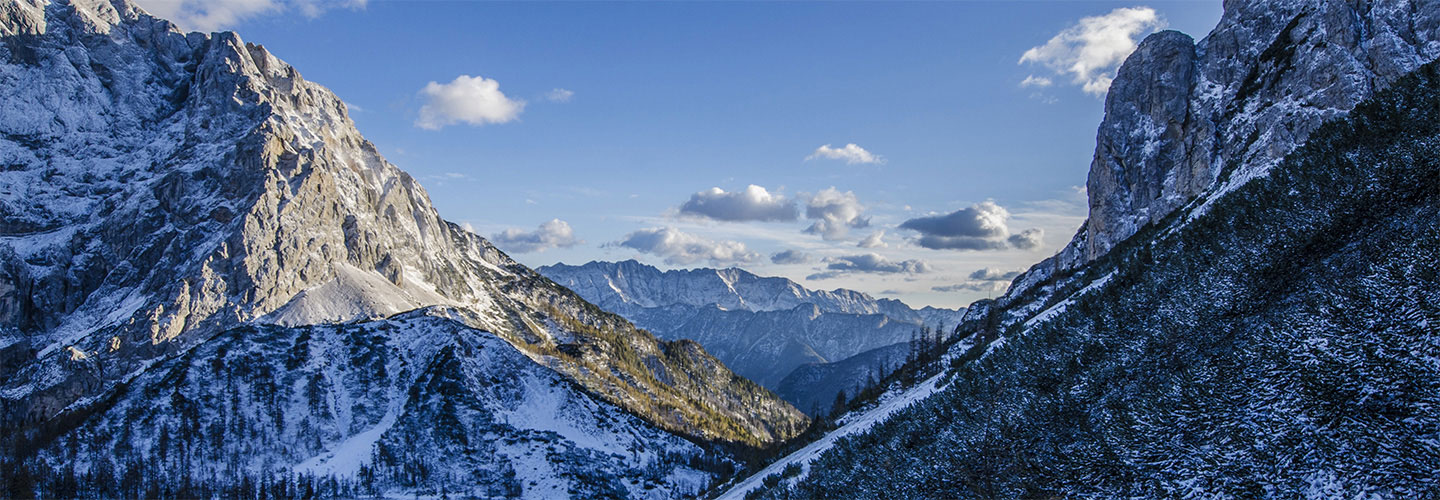
Getting ready for Park City’s winter means preparing for sudden weather changes. With beautiful fall weather, it’s hard to imagine the leaf raking being replaced with the heavy snow of early winter. Snow-covered roofs and ice-cold temperatures are the realities of living at 7,000 ft. above sea level in an area known for its extreme weather.
The best way to mitigate damage to your home is to get ahead of the storms. Here’s a helpful list for what to tackle before winter really sets in.
1. Make Sure to Book a Professional Inspection Early
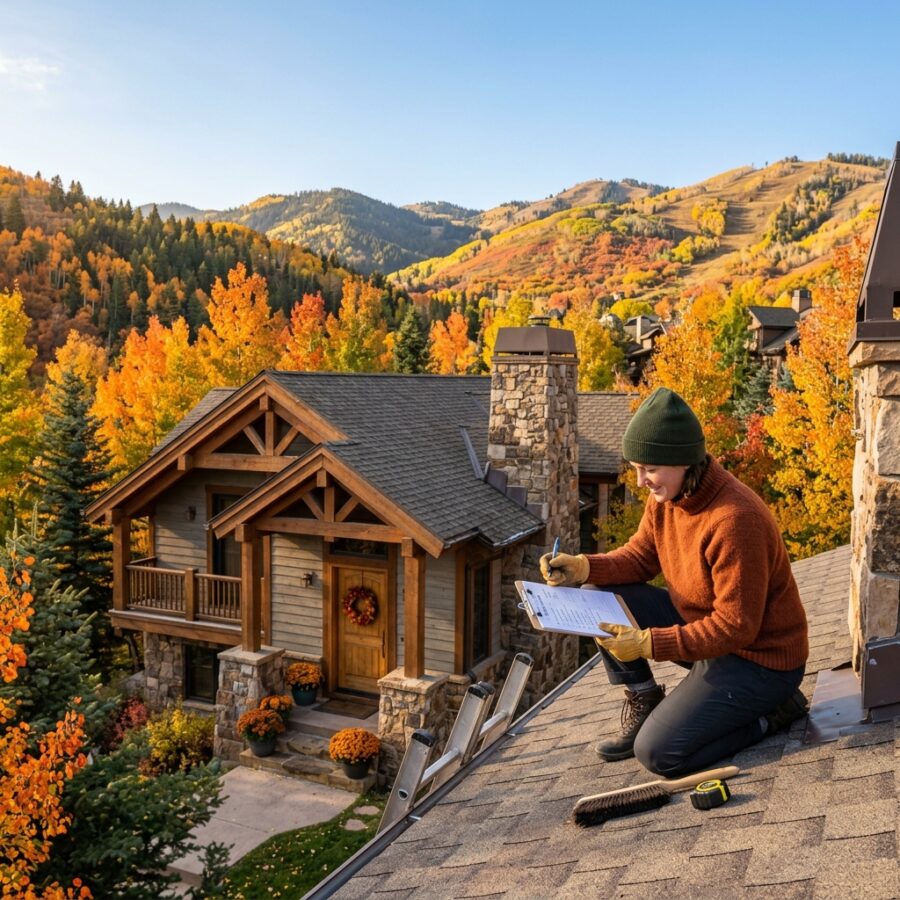
The best Park City roofing contractors are often booked during the inspection season in the run-up to winter, particularly in September and October. Call early to ensure you get an inspection. A thorough winter inspection includes roofing underlayment, decking, shingles, and flashing, snow load concerns, and attic ventilation. Depending on the roof slope, mountain roofs can withstand up to 40 pounds per square foot. In these cases, inspections are vital for addressing any weak spots.
2. Do Repairs to Shingles, Flashing, and Sealants
The summer sun can dry out asphalt shingles, leaving your roof exposed and brittle. The summer can also dry out caulking and sealants, providing an easy route for melting summer and fall snow to enter and cause damage to your home. It’s important to replace, repair, and caulk all shingles, vents, skylights, and chimney bricks in a timely manner before winter fully sets in. Any gap sealed can easily become a much larger problem when frozen snow expands.
3. Clean Gutters and Downspouts
Clogged gutters cause ice dam formations. Ice dams are ridges of ice that cause water to back up under shingles. Ice dams can be costly and a huge headache to deal with. Avoid costly roofing repairs by spending an afternoon cleaning gutters and downspouts to ensure they are working and draining away from the foundation. Repeat the check throughout the fall.
4. Check Attic Insulation and Ventilation
Ice dams can occur from within the home and then work their way outside. Heat escaping the home through an under-insulated attic causes snow to melt. This then refreezes at the eaves, creating ice dams. Park City roofing professionals recommend insulation with an R-Value of R-49 or higher for attic spaces, along with ventilation. If your attic shows frost, damp insulation, or cold spots, address them before it gets too cold.
5. Trim Overhanging Branches
Branches that become weighed down and frozen with ice can be very dangerous since they snap easily. Also, they can remove granules from shingles. Keeping branches 6 to 10 feet from the roof will help your gutters stay clean.
6. Consider Snow Guards and Heat Cables
Metal roofs are common for most roofing projects in Park City. They are very effective for roofs that need to shed snow quickly. Snow guards can help control where snow falls and protect landscaping. Adding heat cables to snow guards can help prevent snow from building up on the eaves.
7. Document and Book Repairs Before the Freeze
Take pictures of your roof from all angles while you can. In the event of a winter mid-season claim for storm damage, those images will provide proof of the roof’s pre-season condition. Also know that once the night temperatures dip below freezing, the roofing crews will be unavailable. So, it is best to schedule your roofing work as soon as possible.
The Bottom Line
The best Park City roofing decisions are made before winter. January emergency roofing repairs will cost much more, be much more disruptive, and will be more difficult to do due to the stormy weather. Paying for a professional inspection in the early fall to assess your roofing is much better than the cost of a winter roofing repair. It will give you a much better idea of your roofing going into the winter season.
Once you do everything on the checklist, you can finally enjoy January, and you won’t be burdened with worry.