
Inflatable stand-up paddle boards are convenient and portable, making them a favorite among water enthusiasts. The mere thought of stuffing a full-sized boat into a backpack is definitely a huge plus for simplicity and travel. Still, such portability does not mean that the equipment is indestructible. Modern PVC materials are sturdy to a great extent; however, ignoring basic maintenance of your equipment will, unfortunately, greatly reduce its lifespan. If you want to use your board for many more years and adventures, you have to take good care of it.
Always Rinse the Board
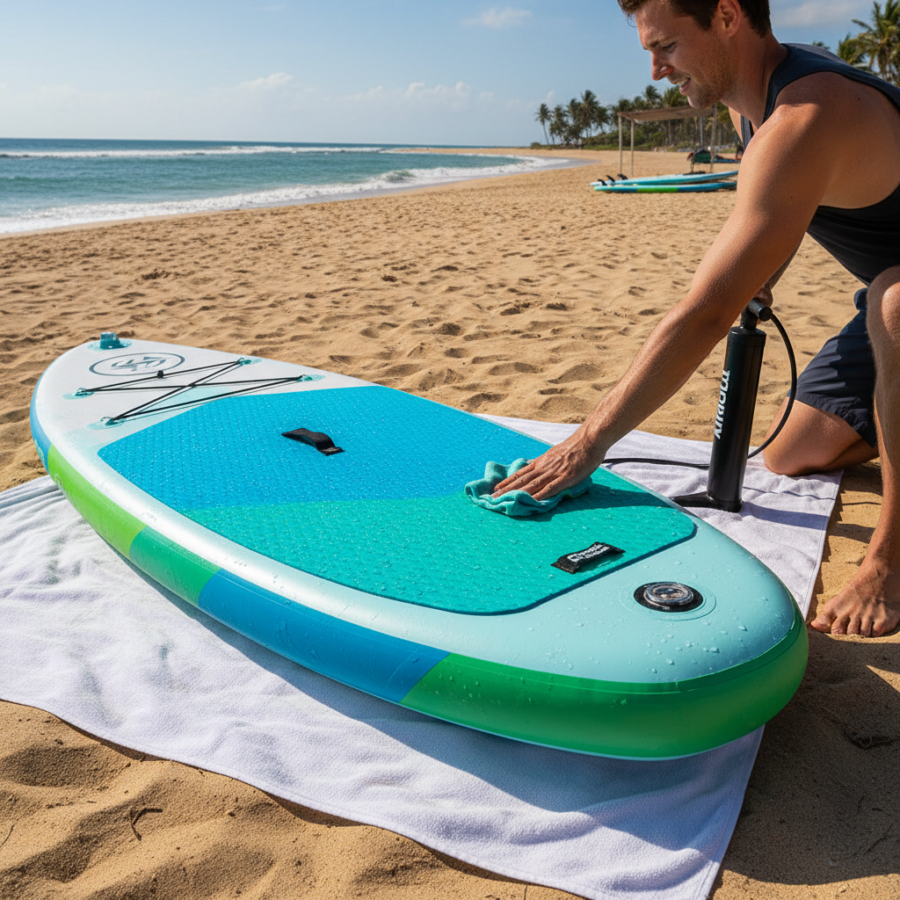
After every use, wash your paddle board with fresh water to get rid of salt, sand, and algae, which are very harmful to gear. To keep your inflatable stand-up paddle board in good condition, you should wash it with clean water after every session. Also, make sure you rinse the entire board, including the fin box and valve areas, which tend to accumulate the most dirt. After that, dry the board thoroughly with a cloth, then fold it. If you leave the board wet, you create ideal conditions for mold and mildew growth, which may weaken the materials and give the board an unpleasant odor.
Learn How to Correctly Inflate and Deflate
If the board is overinflated, it often results in a seam bursting. To avoid this kind of damage, always operate your inflatable stand-up paddle board within the manufacturer’s recommended PSI range (usually 12-18 PSI). The main thing is, do not leave the fully inflated inflatable stand-up paddle board exposed to the sun on the beach. The warming air inside will increase in volume, putting great strain on the seams and potentially causing the material to burst. At the same time, if you have no intention of going to water, it is better to let the air out first.
Storing Your Board Properly
UV is an agent that can destroy PVC and adhesives faster than almost anything else. Keep your inflatable paddle board in a cool, dry place, out of direct sunlight and extreme heat. Store the paddle board by loosely rolling it or only partially inflating it if you have the room. It is better than tightly packing it, as this will create permanent creases on the rails over time.
Spotting the Problems Before They Escalate
Regular inspections for bubbles or hissing should be part of your routine. A leak with a pinhole diameter can be easily spotted by spraying soapy water on the area and observing the bubbles. Most slight damage can be repaired using a standard PVC patch kit. Take care of such small problems whenever they arise, so that you do not have to deal with the big and complicated ones later on.
Wrapping Up
Maintaining your equipment doesn’t have to be a boring routine. Practicing these simple cleaning, inflation, and storage routines will help your inflatable stand-up paddle board to be your faithful companion for many years to come. A well-kept board means your time will be spent on water exploration rather than replacement shopping.